Erasmus+ Collaboration Project Helps to (Co-)Design More Engaging and Impactful Blended Learning
What did we learn from the Erasmus+ project Shift for Change? Discover how co-design can help create more engaging and impactful blended learning experiences!

From September 2025 to March 2026, the Erasmus+ small-scale partnership project “Shift for Change: Using Co-Design for Engaging and Impactful Blended Learning Experiences” brought together learning design and blended learning professionals from Estonia and Finland to explore one shared question:
How can we create learning experiences that truly engage people and create meaningful impact?
In a time where digital and physical learning are inevitably intertwined, it is no longer enough to think in simplified binaries like “online vs in-person learning.” What is needed instead is intentional learning design — thoughtful decisions that shape the learner experience as a whole.
Design that considers:
- the learner,
- the learning context,
- participation and engagement,
- and real-world application.
In this article, we share what we explored during the project, what we learned, and the practical outcomes we created together.
Many learning programs are outdated — but organizations are afraid to “take apart the puzzle”
Blended learning is everywhere today.
The shift accelerated rapidly during the global health crisis in 2020, when many learning activities moved online almost overnight. Since then, organizations have increasingly adopted hybrid and digital learning models.
But does that automatically mean learning has become more engaging or impactful? Not necessarily.
Many organizations have integrated digital tools and hybrid formats into their learning programs, yet learning often remains:
- fragmented,
- passive,
- overly content-driven,
- or reduced to simply “going through materials.”
Why?
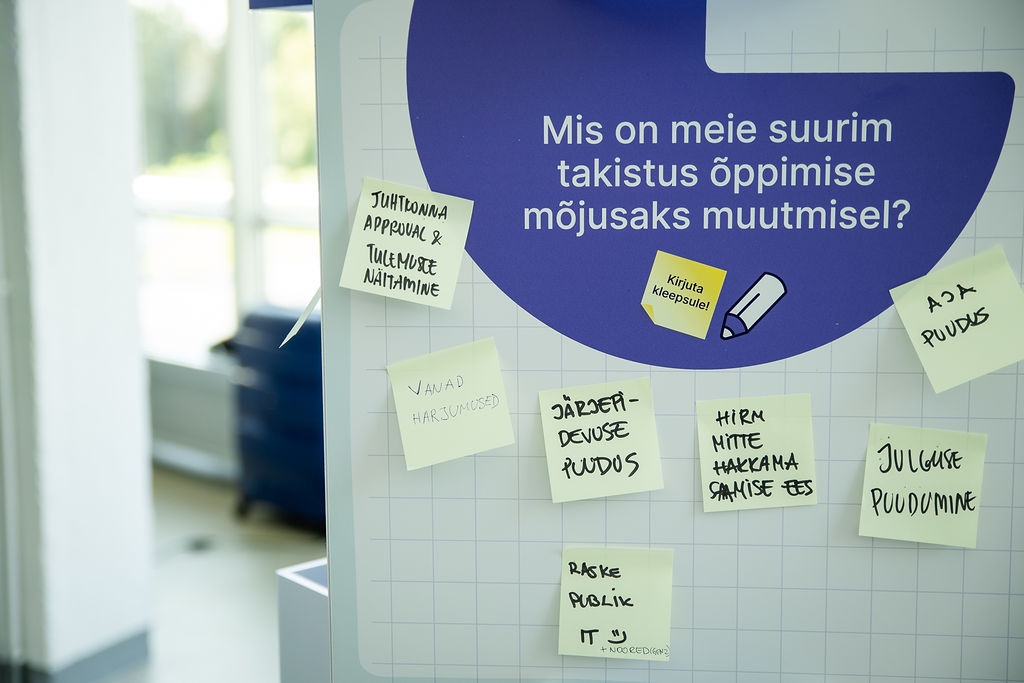
Because organizations are often hesitant to truly redesign existing learning experiences.
The “puzzle” feels too complex, risky, or time-consuming to take apart. As a result, decisions are simplified into things like:
- “Let’s move this part online,”
- “Let’s run this topic as a workshop,”
- or “Let’s add a digital platform.”
But the issue is rarely one individual method or environment. The issue is the overall learning experience — and how the learner experiences it as a whole.
Throughout the project, we repeatedly observed that:
- learning design often focuses on content rather than experience;
- learners remain passive participants;
- digital and physical environments coexist separately instead of supporting each other.
This is exactly where a more intentional approach becomes necessary.
Our Erasmus+ project therefore focused on exploring how to design learning experiences that are both engaging and impactful — not through top-down teaching, but through collaborative discovery and co-creation.
Co-design involves learners in the design process and helps keep the focus on real needs
One of the central ideas of the Shift for Change project was simple:
Don’t design learning only for learners. Design it with them.
Traditional instructional design often works in a top-down way:someone decides what should be learned, and someone else is expected to complete the learning process.
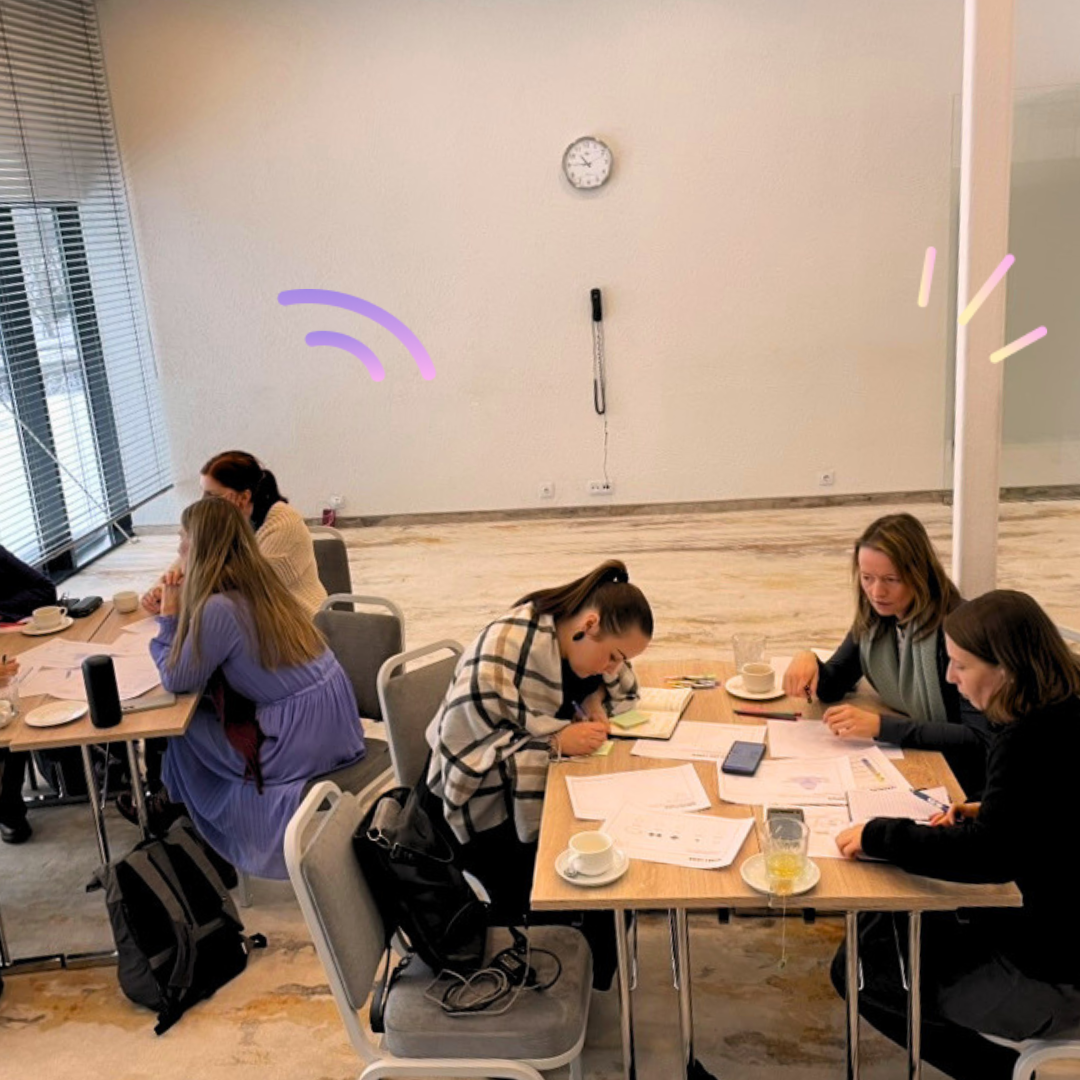
Co-design turns this logic around.
It means:
- involving learners and stakeholders early in the process;
- mapping needs together to focus on what truly matters;
- testing solutions in real-life contexts;
- iterating collaboratively instead of delivering a fixed “package.”
The project itself was built around these principles. Learning designers, facilitators, trainers, researchers, and adult education professionals from different sectors participated in the co-design process throughout the project lifecycle.
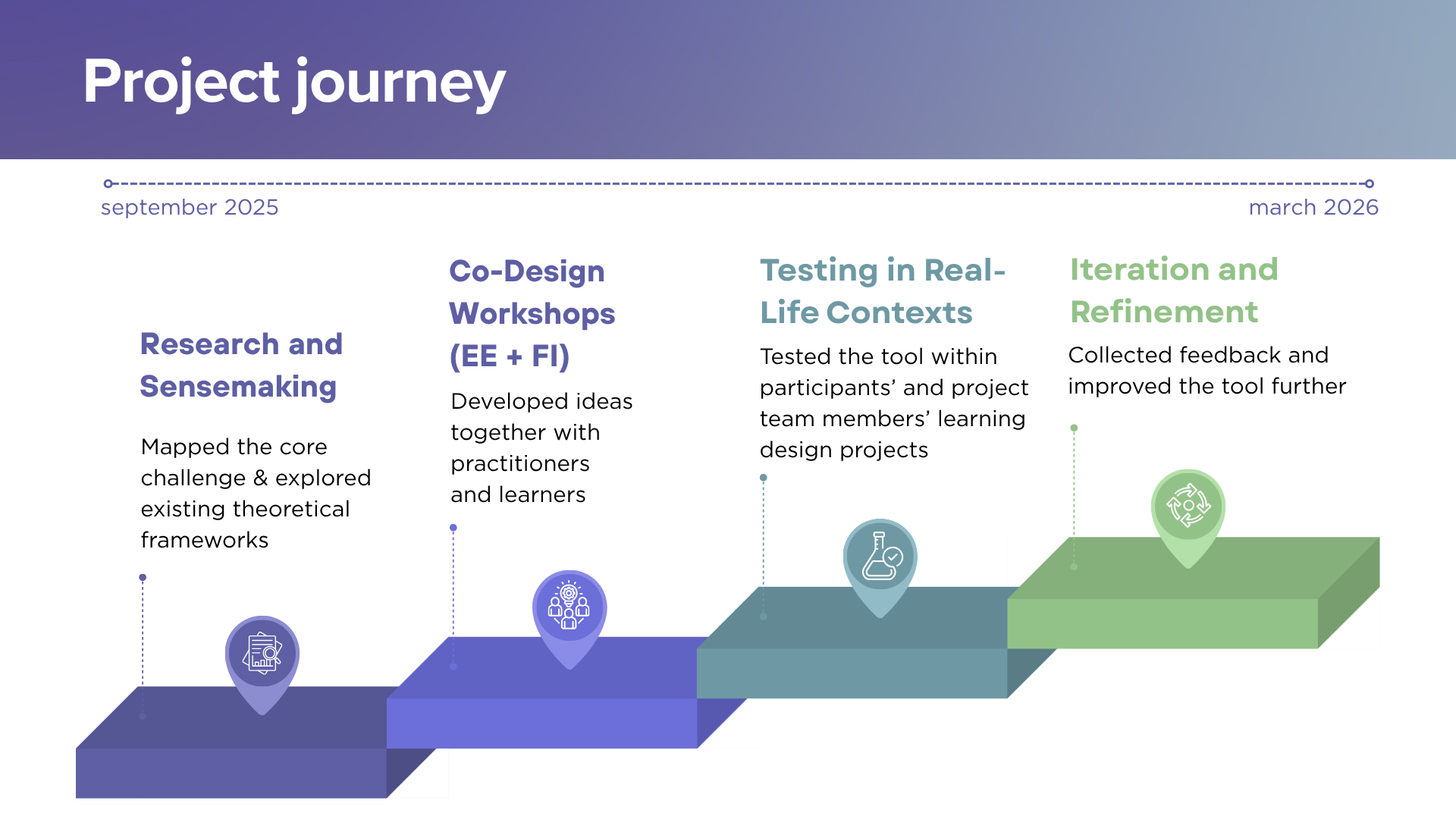
During the project we:
- researched and mapped co-design methodologies for blended learning;
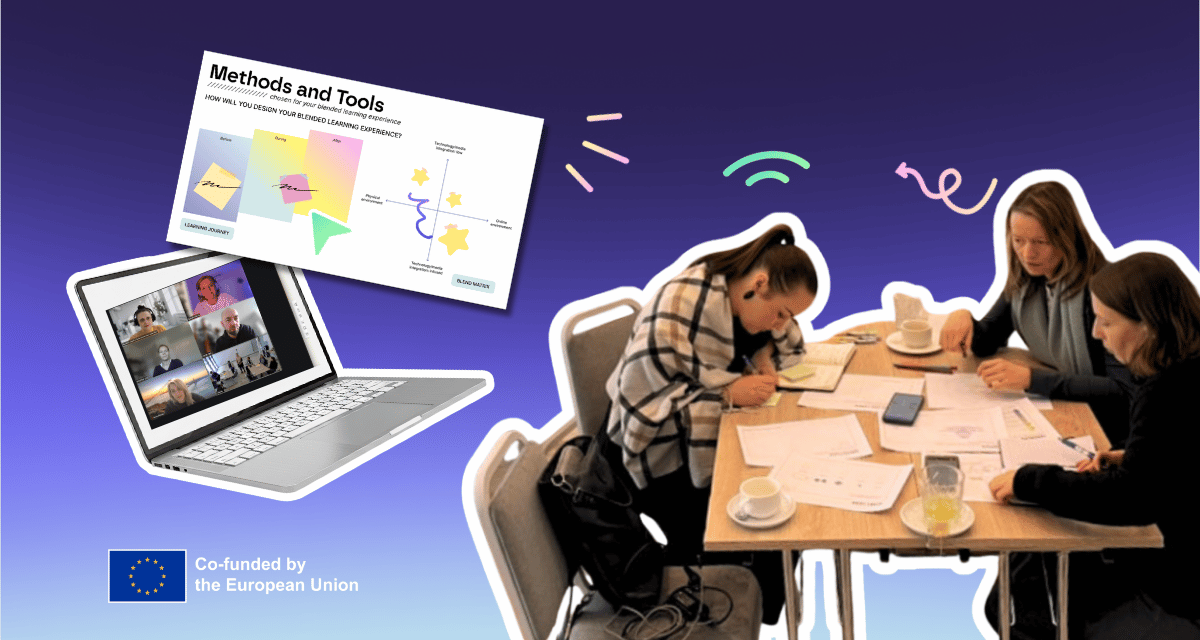
- organized collaborative workshops with learning professionals;
- developed and tested practical co-design tools and methods together;
- collected feedback and iterated the approaches in real-world contexts.
One of the key insights that emerged was this:
Co-design does not have to be complicated.
But it does need to be intentional.
Engaging blended learning intentionally integrates people and technology into one coherent experience
Another major focus of the project was blended learning.
Not as a format.
But as a design decision.
Too often, blended learning simply means:
- one part happens on Zoom,
- another in Moodle,
- and another in a classroom.
But the real question is not where learning happens.
The real question is:
why, how, and what kind of experience it creates.
During the project, we developed and tested approaches that help learning professionals:
- connect the learning journey before, during, and after learning activities into one coherent whole;
- make intentional choices between physical and digital environments;
- consciously integrate technology and media;
- support cognitive, emotional, and social engagement throughout the learning process.
For example:
- What happens before learning begins to prepare the learner?
- How do we keep the learner active throughout the process?
- What helps learners apply what they learned afterward in real life?
If these questions remain unanswered, no technology alone can solve the engagement problem.
One of the project outcomes was an open-access co-designed blended learning toolkit developed specifically to support these decisions in practice.
International collaboration helped test and refine the approach across contexts
The project brought together three organizations with complementary expertise:
- MindShifters OÜ (Estonia) — human-centered learning design and facilitation;
- Stories For Impact OÜ (Estonia) — impact analysis and service design;
- Advicera Oy (Finland) — research, innovation, and digital learning.
The international collaboration allowed the project partners to:
- test tools in different educational and professional environments;
- gather perspectives from multiple sectors;
- refine the methodology through iterative feedback;
- and ensure that the final approaches would be adaptable and scalable across contexts.
The project also included:
- literature reviews,
- stakeholder interviews,
- pilot workshops,
- co-creation sessions,
- dissemination events,
- and open-access publication of the results.
The project later received full funding and highly positive evaluation feedback from the Erasmus+ and European Solidarity Corps Agency, which highlighted the project’s innovative approach, strong implementation potential, and expected long-term impact on the adult education field.
What did the project show?
The Shift for Change project demonstrated that:
- blended learning is not the problem, it is an opportunity;
- co-design is not a “nice to have”, it is essential for meaningful learning;
- impactful learning experiences do not happen accidentally, they are the result of intentional design decisions.
As a result of the project, we created:
- a co-design-based blended learning design methodology;
- practical tools and templates for learning design;
- tested examples and real-world practices;
- and openly accessible resources for learning professionals.
All materials were designed to be practical and usable in real work contexts — not just theoretical inspiration.
View and download the toolkit here
The activities were carried out within the Erasmus+ KA2 cooperation project “Shift for Change: Using Co-Design for Engaging and Impactful Blended Learning Experiences” (2025-1-EE01-KA210-ADU-000364337), co-funded by the European Union.
The project partners were MindShifters OÜ (Estonia), Stories For Impact OÜ (Estonia), and Advicera Oy (Finland).
Disclaimer: The views and materials presented do not necessarily reflect the official views of the European Commission. The European Commission cannot be held responsible for any use that may be made of the information contained therein.